Co-founder
CuraQuery
Co-founder & technical lead · CuraQuery · 2024 — Present
A side project that became a real product. CuraQuery is a health literacy tool that helps people critically evaluate health news through AI-driven analysis. I took it from idea to a live product. I defined the value proposition, scoped the MVP, made build-vs-buy decisions, designed the brand, and built custom hardware and software to keep costs low.
0→1 · Health tech · AI pipeline · Brand · Strategy · Marketing
Context
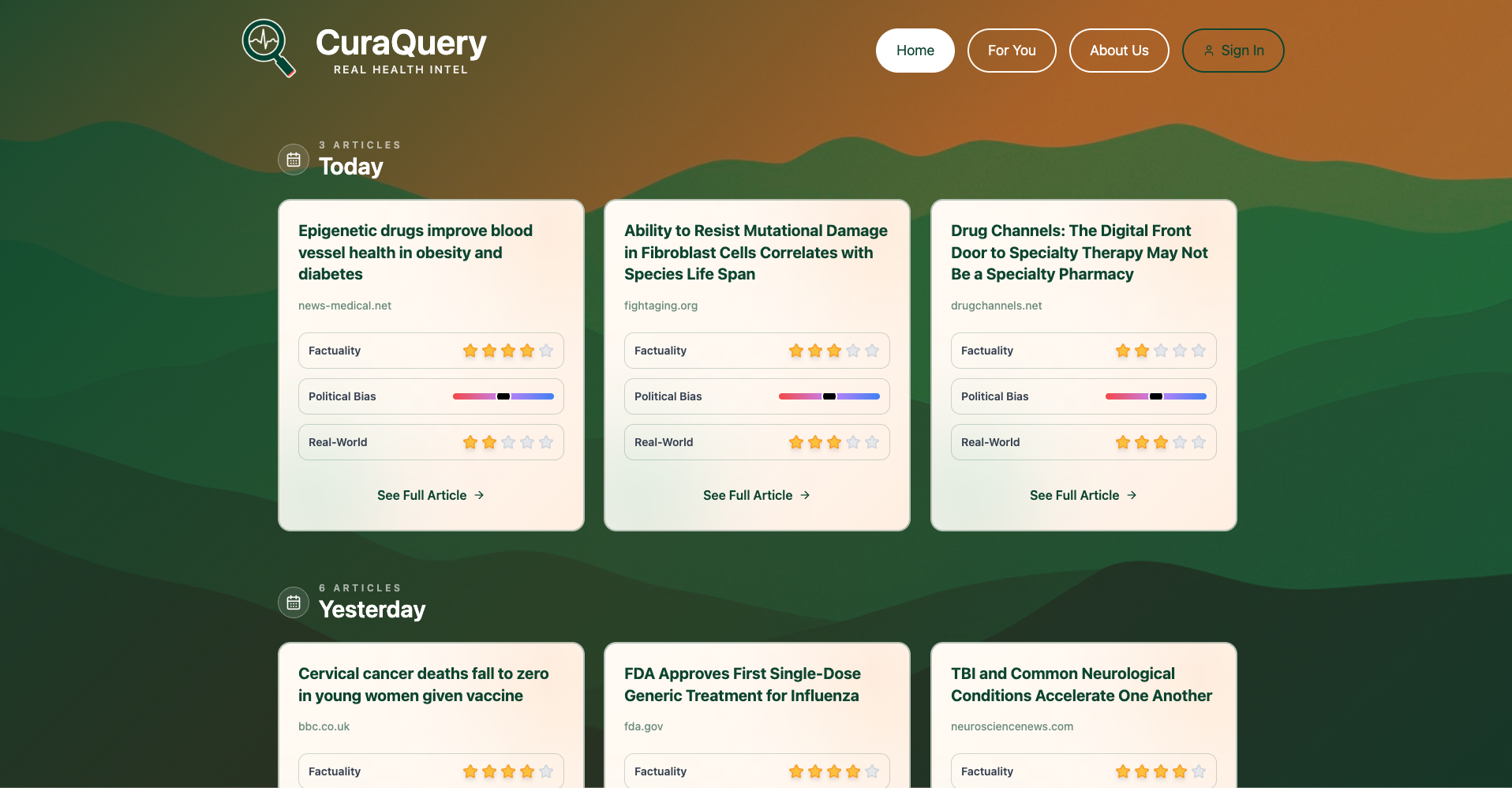
Health news is noisy, and most readers have no good way to tell a careful study from a hyped headline — least of all the people without biomedical training who need it most. CuraQuery is built around health equity: making complex scientific claims legible to the public. It scores the article and the studies behind it, then explains the result in plain language, so readers can draw their own informed conclusions at the point they're reading.
My role
Co-founder and technical lead. In a two-person company that meant wearing most of the hats: CuraQuery was a 0→1 build in every sense — I took it from idea to a live, AI-driven product with no team, scoping and shipping it on a side-project budget. I owned everything that wasn't clinical — product, design, brand, engineering, infrastructure, the user research, and the growth that reached 4,000 monthly readers across 20+ countries. My co-founder, a biomedical scientist, owned the clinical truth, reviewing and approving the science I built the product around.
The product side was hands-on: I interviewed users, gathered their feedback, ran the market research, and iterated. And I built it for someone like me — no biomedical training, no good way to tell a careful study from a hyped headline. That's what makes it the kind of product that wasn't possible before AI: it hands a non-expert the context an expert would bring to a health article. I also tried to give it a brand and interface with some personality, rather than defaulting to something minimal and forgettable.
Approach
CuraQuery was defined by iteration and scrappiness. I'd rather build a small thing well and learn from it than ship a big thing on a guess.
- Build small, then let research decide what's next. I shipped the smallest version of the scoring system that could work properly, put that in front of real users, and used their feedback and market research, instead of my own intuitions, to choose what came next. Every feature had to earn its place through iteration.
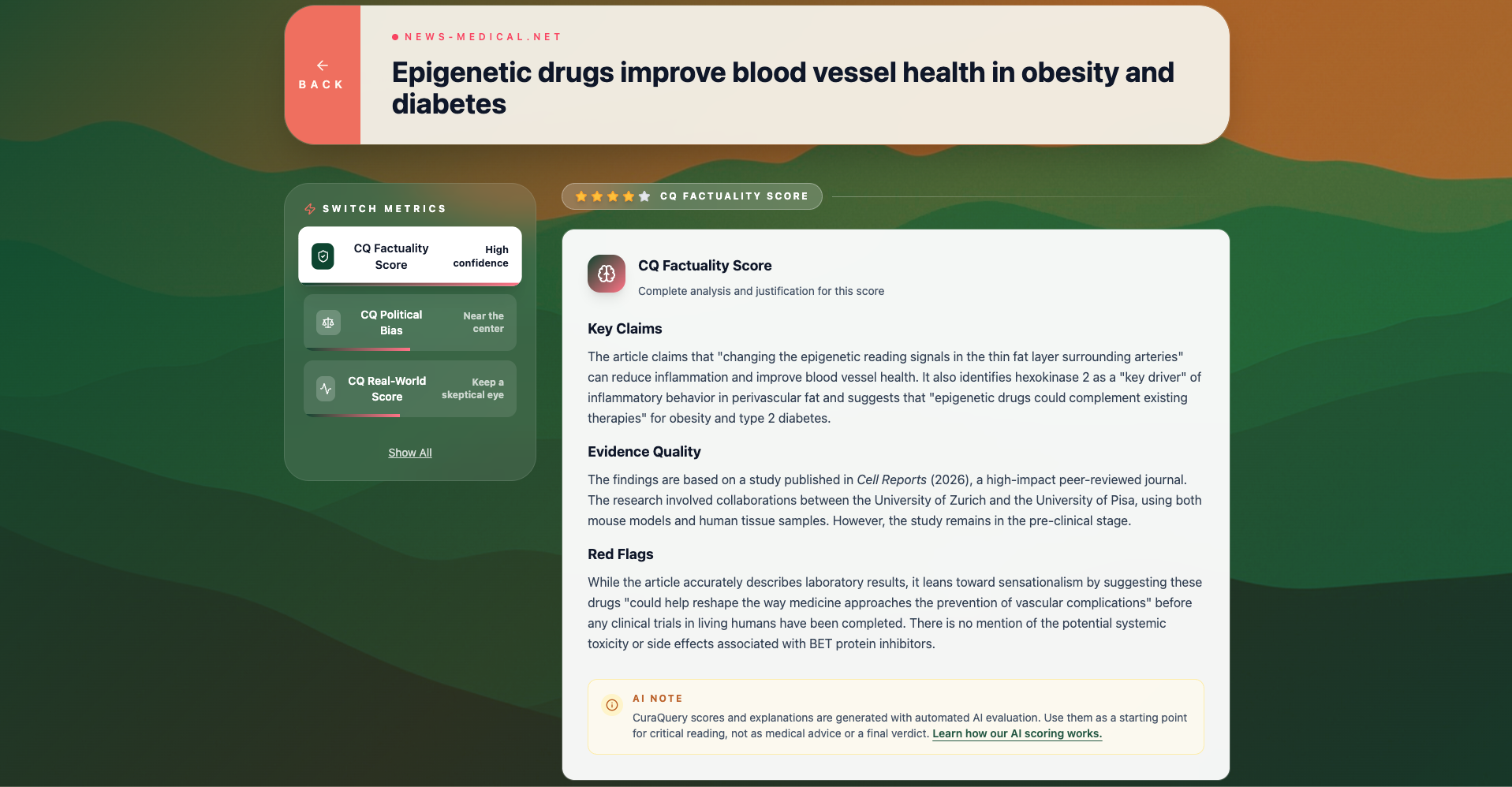
- Treat the design as part of the trust. Handing someone an AI "score" about health and medicine is delicate; a bare number is easy to over-trust or dismiss. So I designed around the reasoning instead of a single number — every score opens into a briefing that shows its work — and aimed for an interface that feels human and considered rather than sterile or generic.
- Stay resourceful. To keep CuraQuery alive on a side-project budget, I built a custom hardware hosting setup instead of renting cloud infrastructure, pushing running costs low enough that the economics never forced a compromise on the product.
Outcomes
Live at curaquery.ca. Grown user base to 4,000 average unique monthly users across 20+ countries.
Reflection
The biggest thing this gave me was the full end-to-end run. Building a real product — the marketing and growth as much as the technical side — showed me just how many tripwires there are along the way, and how much of it you only learn by actually doing all of it yourself.
The lesson that stuck hardest, though, was how much getting the product in front of people matters. You can build the best technical product in the world, but if no one ever sees it, it won't have any impact. A product's value is tied directly to how many people it actually reaches — which is exactly why making something accessible matters so much.